
How to plan a college and career readiness budget


If your district is planning its next college and career readiness budget, this guide will help you decide what to prioritize, what you already have, where the gaps are, how you might fund them, and how to build the case for investment.
And one principle should guide the entire process:
Don’t start with what you want to buy. Start with what you want students to experience.
By the time students leave high school, they should have meaningful opportunities to understand themselves, explore careers, make informed plans, develop and validate skills, gain real-world experience, and connect those experiences to what comes next.
That means your college and career readiness budget shouldn’t be a shopping list. It should be a strategy for aligning limited resources around the outcomes you want for students.
What this college and career readiness budget guide covers
- Start planning at the right time
- Define your grades 6–12 readiness priorities
- Bring the right stakeholders into the process
- Audit existing tools, programs, and state-provided resources
- Identify and prioritize readiness gaps
- Explore potential funding sources
- Build an internal business case
- Ask better questions when evaluating solutions
Your district may already have a lot in place, including state-provided platforms, CTE programs, career planning tools, credentialing, work-based learning, counseling processes, and existing technology. Some may be working exactly as intended. Others may overlap, operate in isolation, or leave important parts of the student journey uncovered.
The goal of this planning process is to see that full picture before you decide what to renew, expand, supplement, or replace.
When should districts begin planning their college and career readiness budget?
Start planning well before your formal budget request is due.
Your district’s fiscal year, board approval process, procurement requirements, and implementation timeline will determine the right timing. Rather than follow a single national calendar, work backward from the date you need a new or expanded readiness initiative fully operational.
The Government Finance Officers Association (GFOA) recommends that school districts begin the budgeting process by bringing together key stakeholders, reviewing current performance and costs, and setting priorities before deciding how to fund them. Its school budgeting framework then moves from planning and priority setting to funding, implementation, and long-term sustainability.
For college and career readiness, start early enough to answer a few important questions before your district commits dollars.
Work backward from implementation
| Timing | Focus |
|---|---|
| 9–12 months out | Clarify goals, review data, inventory current resources, and identify contract or policy deadlines |
| 6–9 months out | Prioritize gaps, estimate costs, explore funding, involve finance and IT, and research options |
| 3–6 months out | Finalize the recommendation, secure approval, complete procurement, and define success measures |
| Before launch | Prepare integrations, training, communications, ownership, and measurement |
The takeaway:
Work backward from implementation, not simply from the date your budget is due. The earlier you clarify your goals, understand your existing resources, and identify your gaps, the more options you’ll have when it’s time to decide what to fund.
What outcomes should a college and career readiness strategy deliver for students?
A strong college and career readiness strategy should help students understand themselves, explore possibilities, make informed plans, develop and validate skills, gain real-world experience, and connect what they learn to opportunities after high school.
That’s a much broader goal than completing a required activity or checking a box.
Think beyond a compliance checklist
State requirements matter, and districts need to meet them. But compliance alone doesn’t guarantee that students experience a connected readiness journey.
A student might complete a career-planning activity, for example, without using what they learned to inform course selection, CTE participation, work-based learning, credential attainment, or postsecondary planning.
That’s why it helps to ask a more useful question:
Are students simply completing readiness activities, or are those activities helping them make better decisions about what comes next?
Federal guidance supports this broader view of career preparation. The U.S. Department of Labor describes career preparation as a process that includes self-exploration, career exploration, academic and career planning, industry-recognized credentials, employability skills, and workplace learning experiences.
The goal, then, isn’t to add as many readiness activities as possible. It’s to create a sequence of experiences that builds clarity and momentum over time.
Consider the full grades 6–12 journey
One way to evaluate your current strategy is to look across the full student journey:
- Self-understanding: aptitudes, interests, values, and preferences
- Exploration: occupations, Career Clusters, industries, education pathways, and labor-market information
- Planning: academic and career plans, course sequencing, CTE programs, and postsecondary pathways
- Skill development and validation: technical and employability skills, industry-recognized credentials, and other evidence of learning
- Experience: job shadows, internships, apprenticeships, employer engagement, and work-based learning
- Opportunity: postsecondary education, training, employment, apprenticeships, and other pathways after high school
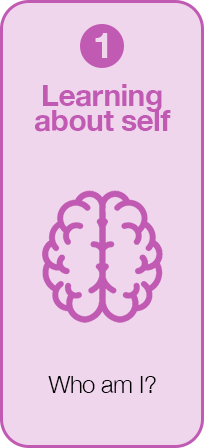
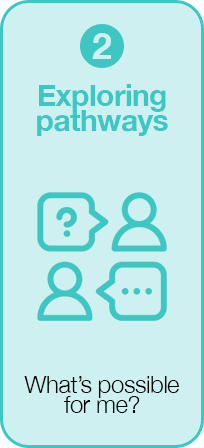



Each stage should build on the one before it.
This progression doesn’t need to look identical in every district. What matters is that students have opportunities to move from discovery to action instead of encountering disconnected experiences along the way.
That starts earlier than high school. Perkins V specifically requires states to provide career exploration and career development activities through an organized, systematic framework that includes students in the middle grades before and during participation in career and technical education.
For budget planning, this gives you a useful lens: Which parts of this journey does your district support well today, and where do students lose the connection?
Those gaps—not the next product on the market—should help shape what you prioritize next.
Who should be involved in college and career readiness budget planning?
College and career readiness touches too many parts of a district to live inside one department.
CTE leaders understand pathway needs. School counselors see where students struggle to turn exploration into plans. Finance brings the sustainability lens, IT understands integration and data requirements, and school leaders know what educators can realistically implement.
Bring those perspectives together early.
Federal CTE policy already reflects the value of broad stakeholder input. Perkins V requires local recipients to conduct a comprehensive local needs assessment, and that process includes consultation with groups such as employers and industry representatives, among others.
Build a cross-functional planning team
Your exact team will depend on your district structure, but consider involving:
| Stakeholder | What they bring to the conversation |
|---|---|
| District leadership | Strategic priorities, accountability goals, and decision-making authority |
| CTE and career readiness leaders | Career pathways, program participation, credentials, and workforce alignment |
| School counselors and student services leaders | Advising workflows, student planning needs, and day-to-day student support |
| Curriculum and academic leaders | Course alignment, instructional priorities, and connections across grade levels |
| Middle and high school leaders | Building-level needs, staffing realities, and implementation feasibility |
| Finance and grants teams | Budget capacity, allowable uses of funds, and long-term sustainability |
| IT and data teams | Integrations, privacy, security, rostering, and reporting requirements |
| Work-based learning staff | Employer partnerships, student experiences, and operational needs |
| Teachers and advisors | What implementation will actually require in classrooms and advising settings |
| Employers and workforce partners | Regional workforce needs and opportunities for career-connected experiences |
| Students and families | How students experience the current system and where they encounter confusion or barriers |
You don’t need every person in every meeting. You do need the right expertise at the right point in the process.
Bring critical voices in early
Don’t wait until your team has selected a solution to involve the people who will need to fund, approve, secure, integrate, maintain, or support it.
Bring them into the conversation while you’re still defining the need.
Finance can help you understand what the district can afford, which funding sources may apply, what costs extend beyond year one, and whether the investment is sustainable. GFOA specifically recommends building a partnership between instructional and finance leaders early in the school budgeting process.
IT brings a different but equally important perspective. CoSN’s 2026 State of EdTech report describes district technology leaders as playing a critical role in areas including student data protection, cybersecurity, instructional support, procurement, and district operations. The report also found that 65% of respondents said their districts require IT review as part of the technology-vetting process.
Employers, workforce development organizations, postsecondary partners, and other community partners can help you understand whether the pathways and experiences you’re building connect to real opportunities in your region.
Perkins V requires local recipients to assess how well CTE programs align with labor-market needs and to consult stakeholders including employers, industry representatives, and workforce development partners.
That input can help you determine whether a readiness investment connects students to meaningful opportunities beyond graduation.
Give stakeholders a problem to solve, not a product to approve
Stakeholder input works best when you’re clear about the question you need help answering.
Instead of asking:
“Do we need a new college and career readiness platform?”
Ask:
“Where are students losing connection between discovery, planning, skill development, and opportunity?”
Or:
“What prevents us from delivering the readiness experience we want for every student in grades 6–12?”
Then let the evidence—and the people closest to the work—help determine the answer.
You may find that you need a new solution. You may also discover that the better investment is expanding something that already works, improving implementation, connecting existing systems, or filling one specific gap.
The takeaway:
College and career readiness may have a clear program owner, but the budget shouldn’t take shape in a silo. Bring together the people who understand student needs, district priorities, funding, technology, and implementation before you decide what to invest in.
How should you audit your current college and career readiness investments?
Before you add something new, take a clear look at what your district already has.
That includes more than purchased software. Your current college and career readiness ecosystem may include state-provided or required platforms, district-funded tools, CTE programs, counseling processes, industry-recognized credentials, work-based learning systems, curriculum, reporting tools, staff-supported workflows, and technology already built into other district systems.
The goal isn’t to prove that you need something new. It’s to understand what each investment contributes, where resources overlap, and where students still encounter gaps.
Start with an inventory, not an assumption
List the resources that support any part of your grades 6–12 readiness strategy, including:
- State-provided or required platforms
- Career exploration, planning, and counseling tools
- CTE, credentials, and work-based learning programs
- Postsecondary planning and student portfolio tools
- Reporting, SIS, and other district technology
- Manual processes staff use to connect the pieces
Then evaluate each resource across five questions:
- Reach: Who uses it, and in which grades?
- Purpose: Which readiness outcomes does it support?
- Adoption: Are students and educators actually using it?
- Connection: Does it integrate with other systems and workflows?
- Value: Is the cost, staff time, and effort justified by what it delivers?
That last question matters. A resource may look duplicative on paper but support a critical workflow that another system doesn’t. Another may have a long feature list but contribute very little to the student experience.
Evaluate what a resource does, not what it costs
Cost matters, especially as districts navigate tighter budgets and greater uncertainty around education funding. Education Week reported in 2026 that funding uncertainty at the federal, state, and local levels was making budget planning more difficult for districts, with some taking a more conservative approach.
But price alone tells you very little about value.
Your district may have access to a state-funded or required resource that supports important parts of career planning at little or no direct cost. Use it. Get as much value from it as you can.
Then ask whether it covers everything your students need.
Free can be excellent. Required can be useful. Neither automatically means complete.
So instead of asking whether you already have a college and career readiness platform, ask:
“Does what we have support the full readiness experience we want for students?”
A resource might help students explore careers without connecting those discoveries to course planning. It might meet a state planning requirement but offer limited support for skill validation or work-based learning. Or it might provide strong functionality that your schools simply haven’t implemented consistently.
One gap may require a supplemental capability. Another may call for better implementation rather than another purchase. Knowing the difference helps your district spend more intentionally.
Look for overlaps and disconnects
As you map your current resources, look for two things at the same time: where capabilities overlap and where the student journey breaks apart.
Overlap isn’t automatically wasted. Two resources may support similar functions while serving different grades, workflows, or student needs. In other cases, your district may be paying for essentially the same capability twice without gaining additional value.
At the same time, some of the biggest gaps may sit between systems rather than inside them.
Imagine this: A student explores careers in one system, creates an academic and career plan in another, earns an industry-recognized credential somewhere else, and completes work-based learning through a separate process.
Each experience may be valuable on its own. The challenge comes when students, educators, or district leaders can’t connect those experiences into a coherent picture.
CoSN identifies interoperability—the secure exchange of data among systems—as an important part of a district technology ecosystem. Its guidance notes that disconnected systems can add time and cost, while better interoperability can help districts build a more complete view of student learning and progress.
As you review your ecosystem, pay attention to both duplication and friction: overlapping functionality that adds little value, repeated data entry, spreadsheets that bridge systems, or information educators can’t easily access.
The goal isn’t to make every system do everything. It’s to make sure each resource earns its place and works well enough with the others to support a connected student experience.
Separate a capability gap from an implementation gap
This may be the most important distinction in the audit.
If students aren’t receiving an experience you want them to have, ask why before you budget for a solution.
You may have a capability gap: nothing in your current ecosystem can do what you need.
Or you may have an implementation gap: the capability exists, but students aren’t benefiting from it because of low adoption, inconsistent use, limited training, poor integration, unclear ownership, or lack of time.
Those problems require very different investments.
If the capability already exists, the best budget decision may involve training, implementation support, process changes, or stronger accountability rather than another contract.
If the capability truly doesn’t exist, you’ve identified a much stronger case for investment.
The takeaway:
Audit your college and career readiness ecosystem before you shop for solutions. Understand what each resource does, how well people use it, how it connects to the student journey, and where gaps remain. Then decide whether to improve, expand, supplement, consolidate, or replace what you already have.
How should you prioritize which readiness gaps to fund?
Not every gap deserves another investment.
Once you identify where your current strategy falls short, resist the urge to solve everything at once. Instead, rank potential investments based on the difference they could make for students and the resources they will require.
GFOA recommends that districts weigh competing priorities against one another, focus on the options with the greatest potential impact on student achievement, and consider the financial and operational trade-offs before allocating resources.
Use a consistent lens to compare priorities
Evaluate each potential investment across a common set of criteria:
| Criteria | What to consider |
|---|---|
| Student impact | How directly could this improve student decision making or readiness? |
| Reach | How many students would benefit? |
| Strategic alignment | Does it advance district or board priorities? |
| Compliance | Does it support required state or federal activities? |
| Equity and access | Could it expand access to meaningful readiness experiences? |
| Measurability | Will you be able to tell whether it is working? |
| Staff impact | Will it add work, reduce work, or change existing workflows? |
| Integration | How well will it fit with current systems and processes? |
| Sustainability | Can you support it beyond the first year? |
| Opportunity cost | What might you have to delay, reduce, or stop funding to make room for it? |
You don’t need a complicated scoring model. The value comes from applying the same criteria to every option rather than letting the newest or loudest priority drive the decision.
Look for the highest-value combination, not the longest wish list
A high-priority investment should solve a meaningful problem without creating a bigger one somewhere else.
For example, an initiative may reach thousands of students but require significant staff capacity to implement. Another may serve fewer students but address a critical district priority. Reach alone doesn’t determine value.
That’s why prioritization requires trade-offs.
Your goal is to find the combination of investments that moves your district closer to the outcomes you defined earlier while staying realistic about budget, staffing, technology, and implementation capacity.
The takeaway:
You probably won’t fund every gap you identify. Prioritize the investments that create the most meaningful value for students, align with district goals, fit your existing ecosystem, and give you a realistic way to measure progress.
What funding sources can support college and career readiness?
College and career readiness rarely sits neatly inside one budget line.
Districts may use a mix of federal, state, local, workforce, grant, and community funding to support different parts of the student experience. The key is to match each funding source to the specific activity it allows rather than assume an entire college and career readiness solution qualifies under one program.
Funding eligibility depends on the activity, students served, state plan, local application, and current program requirements. Confirm allowable uses with your state agency, grants team, or legal and finance staff before committing funds.
Important funding note: This article is provided for informational purposes only and does not constitute legal, financial, or grant-compliance advice. Federal, state, and local funding requirements vary and may change. Before using any funding source discussed here, confirm current eligibility and allowable uses with your district’s legal counsel, finance or grants team, and the appropriate state or federal grant administrator.
Perkins V
Perkins V can support a range of career and technical education and career-development activities.
Federal law allows local Perkins V funds to support eligible CTE activities such as career exploration and development, career and labor-market information, student career plans, career guidance, professional development, work-based learning, and industry-recognized certification exams. Those expenditures must support qualifying CTE programs, address needs identified through the comprehensive local needs assessment, and meet applicable Perkins V, state, and local requirements.
That makes Perkins V a potential fit for parts of a district’s readiness strategy, especially when the investment connects directly to:
- CTE programs of study
- Career exploration and guidance
- Work-based learning
- Industry-recognized credentials
- Professional development tied to CTE
- Technology or instructional resources that support eligible CTE programming
The important thing to remember: Perkins V isn’t generic technology funding.
ESSA Title IV-A
Title IV-A may also support specific parts of a college and career readiness strategy.
U.S. Department of Education guidance identifies college and career counseling as an allowable well-rounded education activity under Title IV-A. The program also allows other activities related to well-rounded education and effective use of technology, depending on the proposed use and local needs.
This isn’t just theoretical. A 2026 federal study found that 31 states reported providing districts with support related to college and career counseling as a Title IV-A activity.
That makes Title IV-A worth exploring for eligible activities, but the same rule applies: evaluate the specific use, not the platform as a whole. Your district’s allocation, needs assessment, state guidance, and local application will determine what fits.
WIOA and local workforce partnerships
The Workforce Innovation and Opportunity Act (WIOA) presents a different opportunity.
The WIOA Youth Program serves eligible young people ages 14–24 who face barriers to education, training, or employment. Federal rules generally require local areas to spend at least 75% of WIOA Youth funds on out-of-school youth and at least 20% on work experience.
That means districts should not treat WIOA Youth as a general funding source for districtwide college and career readiness technology.
The stronger opportunity is partnership.
Local workforce development boards, American Job Centers, youth employment programs, and apprenticeship intermediaries may be able to support eligible students, work experiences, career pathways, apprenticeships, or related services.
Federal agencies have also encouraged states and local partners to align Perkins V and WIOA activities more closely, including through coordinated planning around career pathways and credentials.
So instead of asking, “Can WIOA pay for our college and career readiness platform?” ask:
“Where could our workforce partners help us expand eligible career pathways, experiences, or services?”
State and local funding
Federal programs are only part of the picture.
Depending on your state and district, potential funding may include:
- State CTE allocations
- Dedicated college and career readiness appropriations
- Career-connected learning or work-based learning grants
- Credential incentives
- State workforce or economic development programs
- District general funds
- Local funding measures, where applicable
Because these opportunities change frequently, avoid relying on an old list of grants. Check your state education agency, workforce agency, and current Perkins V state plan each budget cycle.
Grants and community partnerships
Foundations, regional workforce initiatives, chambers, economic development organizations, employers, and postsecondary partners may also support parts of a readiness strategy.
These sources can be especially useful for:
- Pilots
- Work-based learning expansion
- Employer engagement
- Student experiences
- Startup or one-time implementation costs
Use temporary funding strategically. A strong pilot can help your district prove value and build support, but avoid creating a core program that disappears when a grant ends.
Consider braiding funding sources
You may not find one funding source that covers your entire college and career readiness strategy—and you may not need to.
Instead, districts can sometimes align several funding streams around different parts of the work. For example:
| Funding source | Potential role |
|---|---|
| District funds | Core infrastructure or ongoing districtwide needs |
| Perkins V | Eligible CTE and career-development activities |
| Workforce partners | Eligible youth services, work experiences, or pathways |
| Employers/community partners | Work-based learning or employer-connected experiences |
| Grants | Pilots, expansion, or startup costs |
This approach is often described as braiding funding: coordinating multiple funding streams around a shared strategy while keeping each source’s rules, reporting, and allowable uses separate.
That last point matters. Braiding funding doesn’t make funding restrictions disappear. Each expenditure still has to qualify under the source paying for it.
The goal isn’t to find a creative way around funding rules. It’s to build a sustainable strategy by matching the right resource to the right part of the work.
How do you build the internal case for a college and career readiness budget?
Getting an initiative into the budget takes more than showing that a solution has useful features. You need to connect the investment to a district priority, show the gap between where you are and where you want to be, and explain how you’ll know whether the investment worked.
As a best practice, you should avoid leading with the product. Start with the student outcome instead:
“By the end of grade 8, every student should have meaningful career discovery information that informs an academic and career plan.”
Or:
“Every high school student should be able to connect a career goal to coursework, CTE pathways, validated skills, and a real-world experience.”
Then establish your baseline. Depending on the goal, that could include CTE participation, credential attainment, work-based learning participation, plan completion, system usage, counselor workload, or other measures your district already tracks.
The business case becomes much stronger when you can say where you want to go, where you are today, and how large the gap is.
Granite School District in Utah offers a useful example of why measurable outcomes matter when building internal support. As part of an intentional scheduling model that uses YouScience Aptitude & Career Discovery data to help guide student pathways, the district reported 152% growth in CTE enrollment and participation, 142% growth in CTE concentrators, and 113% growth in CTE completers from 2022 to 2024. District leader Danie Natter noted that administrative support depended on showing “concrete outcomes rather than just promises of preparation.”
Connect the investment to existing district priorities
A college and career readiness investment shouldn’t feel like a standalone initiative competing for attention.
Show how it advances priorities already on the district’s agenda, such as graduation, postsecondary readiness, workforce readiness, CTE participation, student engagement, workforce partnerships, or state accountability requirements.
That connection matters because budget decisions rarely happen in isolation.
Show the full cost—and value—of the current state
Don’t limit the analysis to license prices.
Look at the broader picture: overlapping contracts, manual staff time, underused resources, integration work, reporting effort, and other costs required to keep your current readiness ecosystem running.
CoSN recommends using Total Cost of Ownership when evaluating education technology, which includes not only licenses and subscriptions but also infrastructure, support, training, maintenance, and indirect staff labor.
The point isn’t to prove that consolidation will save money. It’s to understand the total cost and total value of what you have before deciding whether to improve, supplement, consolidate, or replace it.
Define success before you ask for the money
Decide what leadership should expect to see after the first year.
That might include greater student participation, stronger adoption, increased credential attainment, more work-based learning experiences, reduced manual work, or clearer visibility into student progress.
Define those measures before purchase so the district can evaluate whether the investment delivered what you promised.
What should you ask when evaluating college and career readiness solutions?
Once you’ve defined the outcome, identified the gap, and built the case for investment, evaluate solutions against that need—not against the longest feature list.
Start with questions like:
- What specific readiness gap will this solution solve?
- Which parts of the grades 6–12 student journey does it support?
- How does it help students discover possibilities and turn that discovery into informed decisions?
- How does it connect to CTE, skill development, industry-recognized credentials, and work-based learning?
- What can educators and district leaders measure?
- How will it work alongside required or state-provided resources?
- What integrations, training, implementation support, and ongoing staff capacity will it require?
- What evidence shows meaningful adoption and student outcomes—not simply access to the platform?
The goal isn’t to find the solution with the most features. It’s to find the one that best addresses the outcomes and gaps you’ve already identified.
YouScience Brightpath® is designed to connect discovery, planning, skill validation, work-based learning, and next-step opportunities across the grades 6–12 journey.
Planning your next college and career readiness investment?
Use the free College & Career Readiness Budget Planning Toolkit to inventory your current programs and systems, identify and prioritize gaps, explore potential funding sources, build your internal case, and compare solutions
Includes editable planning templates you can copy and customize for your district. Download now
Why should you plan for implementation before you make the purchase?
Budget approval isn’t the finish line. A strong solution can still underperform if your district hasn’t planned for the work required to launch and sustain it.
Before you commit, define who will own implementation and what success will require across:
- SIS and integration setup
- Roster and data preparation
- Counselor and teacher training
- Student launch and communications
- Reporting expectations
- Adoption metrics
- First-year milestones
CoSN resources on EdTech procurement and management emphasize considerations beyond functionality, including interoperability, privacy and security, training, and ongoing support.
Define what success looks like before launch
Set a small number of first-year measures before implementation begins. Those might include student participation, staff adoption, integration milestones, training completion, or progress toward the student outcome that justified the investment.
That helps your district see whether the solution is becoming part of the day-to-day readiness strategy—or simply another available tool.
The takeaway:
Plan for implementation before you buy. Define ownership, operational requirements, and first-year measures early so your district knows what success should look like from the start.
A better college and career readiness budget starts with a better question
Don’t start with:
“What college and career readiness products should we buy next year?”
Start with:
“What should every student experience between grades 6 and 12—and what do we need to make that experience possible?”
That shift changes the entire budgeting conversation.
It shifts the focus from products to outcomes and from isolated purchases to a connected strategy for helping students understand themselves, make informed decisions, develop skills, gain real-world experience, and move toward what comes next.
A strong planning process follows a simple progression:
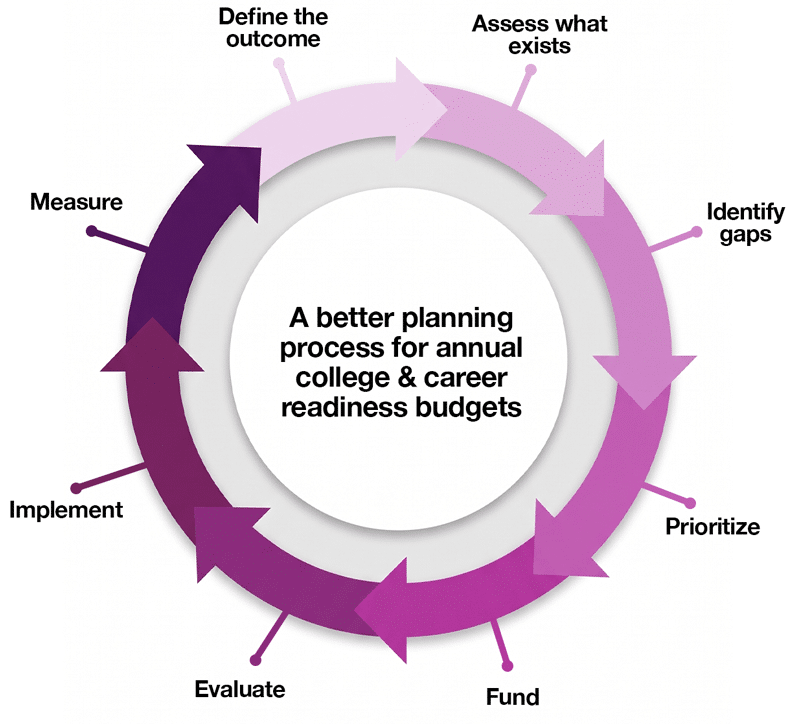
You may end up expanding something you already have. You may supplement a state-provided resource. You may consolidate overlapping tools. Or you may decide that a new investment fills a gap your current ecosystem can’t.
The right answer will look different for every district. The goal is to make sure your budget reflects the student experience you’re trying to create—not simply the tools available to buy.
“My work with YouScience and moving the industry-recognized credentials to the Nevada list is really one of my greatest contributions in my professional life. Two entities came together and had a vision that is going to create every opportunity for students in Nevada.”
— Candi Robles, CTE & WBL Coordinator, Carson High School
College and career readiness budget planning FAQs
Funding reminder: The funding information below is general guidance only. Confirm current eligibility and allowable uses with your legal counsel, grants team, and applicable grant administrators.
When should districts start planning their college and career readiness budget?
Districts should begin during their strategic planning and needs-assessment process, before formal departmental budget requests are due. Work backward from local budget adoption, procurement, and implementation deadlines.
What should be included in a college and career readiness budget?
Potential investments include career discovery and exploration, academic and career planning, CTE pathways, skill development and credentials, work-based learning, postsecondary planning, counseling capacity, data/reporting, implementation, professional development, and technology integrations.
Can Perkins V fund college and career readiness?
Perkins V can support many eligible CTE and career-development activities, including career exploration and certain work-based learning and credential-related activities, but eligibility depends on the activity, state/local plans, and program requirements. Districts should confirm any proposed use against current federal, state, and local requirements.
Can Title IV-A support college and career readiness?
Title IV-A permits college and career counseling as a well-rounded education activity, among other allowable uses. Districts should confirm that proposed spending aligns with their allocation, needs assessment, and applicable program rules.
Can WIOA funds support high school career readiness?
Potentially, but WIOA Youth is targeted to eligible young people and is not a general district college and career readiness funding source. Districts should explore partnerships with local workforce boards around eligible youth, work experience, career pathways, and apprenticeship opportunities.
Should districts replace a free state-provided career platform?
Not necessarily. Districts should first determine what the state-provided system accomplishes, how well students and staff use it, what requirements it satisfies, and whether important readiness gaps remain.
What should districts consider when choosing a college and career readiness platform?
Districts should evaluate alignment to student outcomes, grade-level coverage, student engagement, career discovery methodology, planning capabilities, CTE and work-based learning connections, reporting, integrations, implementation requirements, and evidence of impact.
How much should a district budget for college and career readiness?
There is no single benchmark. Costs depend on district size, existing programs, state-provided resources, staffing, technology, implementation needs, and the gaps the district is trying to solve. Start by defining the outcomes and current-state gaps, then calculate the full cost of the investments required to address them.
Ready to turn your readiness priorities into a plan?
Talk with our team about your district’s goals, current tools, and readiness gaps, and see how YouScience Brightpath® can support a more connected grades 6–12 experience.
Download the toolkit
By entering your email above you agree to receive marketing communications from YouScience.