
Disrupt Education Podcast 4: Beyond the Platform


Why students disconnect: Reconnecting learning to purpose and opportunity
Disrupt Education x YouScience podcast series — Episode 4 recap
Most education systems were designed to move students through school, not to help them understand who they are, where they are going, or how learning connects to real life.
Episode 4 of the YouScience and Disrupt Education podcast goes deeper than systems or tools. It explores the root of student disengagement and what changes when learning becomes personal, measurable, and connected to a real future.
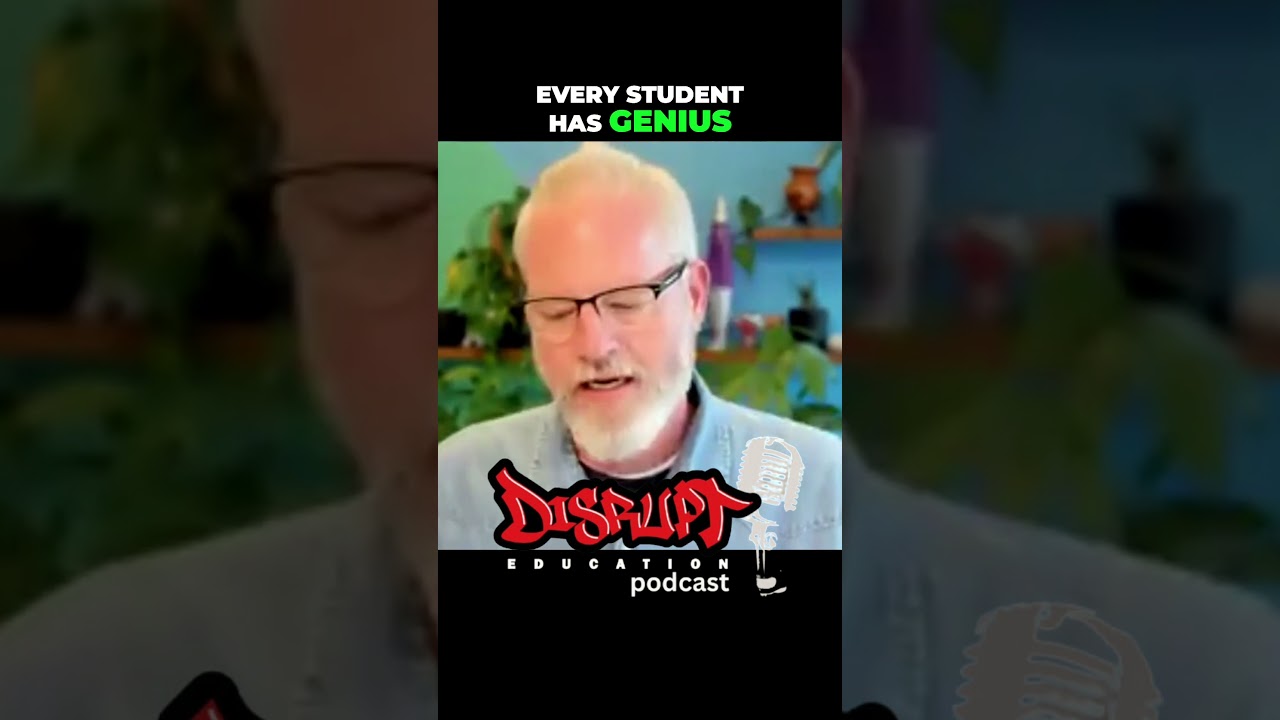
Hosts Peter Hostrawser and Alli Dahl are joined by Edson Barton, CEO and founder of YouScience, for a conversation that moves from personal experience to first principles to what readiness looks like in an AI-driven world.
Students aren’t disengaged. They’re disconnected.
Students are not opting out of learning because they do not care. They are opting out because they do not see the point.
As Edson explains, engagement starts high in early education but steadily declines as students move through the system. By high school, many feel disconnected from what they are learning and why it matters.
At the center of that disconnect is a question students rarely get a clear answer to: Why am I learning this? As Edson puts it, “How does this impact me and my future self? That’s when it really makes a difference.”
When students can see that connection clearly, effort tends to follow with greater purpose.

Knowing you’re capable isn’t the same as knowing where to apply it
One of the most defining moments in the episode comes from Edson’s own experience as a student.
He describes being disengaged throughout much of school, unsure of where he fit or how his abilities applied to anything meaningful. That changed when he began managing a restaurant in high school, where he was solving real problems, leading people, and seeing the impact of his decisions.
That experience led to a realization: he was capable all along, but had never been shown where to apply those strengths.
This is a common experience. Students move through school with ability, but without direction, and without that connection, effort can feel abstract.
Most career guidance starts with the wrong question
For years, career exploration has relied on interest-based surveys. While well intentioned, they ask students to define themselves before they have enough exposure to do so.
Students can only express interest in what they know. Their responses are shaped by limited exposure, peer influence, and assumptions about success. In many cases, they answer based on what they think will lead to a certain outcome, not what reflects their strengths.
As Edson explains, this creates a distorted view. “You’re just looking at a mirror of that student. And not only a mirror, it’s actually a distorted mirror.”

When you measure ability, new pathways open
The shift from interest to aptitude changes the starting point.
Instead of asking students to define themselves, aptitude-based approaches measure how they naturally think, learn, and solve problems. These traits exist regardless of exposure or environment.
When students see those strengths reflected back to them, they begin to recognize abilities they may not have considered. As new pathways emerge and learning becomes more relevant, effort often becomes far more intentional.
When learning connects to outcomes, behavior changes
That shift has produced measurable outcomes. For example, Sinclair Community College increased enrollment from feeder schools by 48 percent by engaging students aligned to program aptitudes. Another example comes from How Yakima School District proved the value of CTE, where one school district connected certifications to college credit and workforce pathways, saving families an estimated $350,000 to $500,000 annually.
These outcomes are not driven by pressure, but by helping students see where their effort can lead. The real gap is not talent, but connection.
The workforce challenge is often framed as a shortage of talent
This conversation suggests something different: students and opportunities both exist, but they are too often not connected in meaningful ways.
Edson describes the current system as a filter through which students move through school, graduate, and are then left to navigate what comes next largely on their own. Without a clear pathway, many struggle to translate their experiences into direction.
That disconnect does more than slow progress. It leaves potential unrealized.

AI will change how we deliver, not what matters
As the conversation turns to AI, the focus shifts from disruption to adaptation.
AI can make learning more accessible and more responsive. It can deliver insights in real time and help students adjust as their goals evolve. But while those advances may expand what is possible, they do not replace what makes learning meaningful.
They do not replace human connection, or the moment someone helps a student see themselves differently.
The future depends on better connection
Throughout the episode, one idea remains constant: progress in education will come from strengthening connection, not adding complexity.
- Connection between students and their strengths.
- Connection between learning and real-world application.
- Connection between education and opportunity.
When those connections are clear, students move forward with purpose because they understand where they are going.
That is the shift this episode points toward: a more intentional system that helps individuals see what they are capable of and act on it.
What’s next in the series
Episode 5 brings this into focus through a real student journey, showing what happens when someone reaches the end of their education without direction, and how that clarity can still be built.
Listen to the full Episode here:
YouTube: https://www.youtube.com/watch?v=5S9eFwc3rOQ
Spotify: https://open.spotify.com/episode/3dPJMZk7bAm6zMBO6dGiN5?si=f147156edaed4eaf
Disrupt Education Page: https://disrupteducationpodcast.com/
Explore the YouScience × Disrupt Education podcast page: https://www.youscience.com/disrupteducation-podcast/
See how YouScience helps students connect learning to what comes next.