
How Jason Van Nus is redefining work-based learning in Georgia
TL;DR: Innovative approaches to WBL and CTAE
- A nationally recognized work-based learning and youth apprenticeship model led by Georgia ACTE Teacher of the Year Jason Van Nus
- Employer partnerships built on aptitude data, not assumptions
- A student-driven Reverse Career Fair that teaches young people to advocate for their strengths
- Entrepreneurial success stories like one featuring a student who became both a WBL student and a WBL employer
- A community and industry-aligned approach that treats high school students as current economic assets—not future maybes
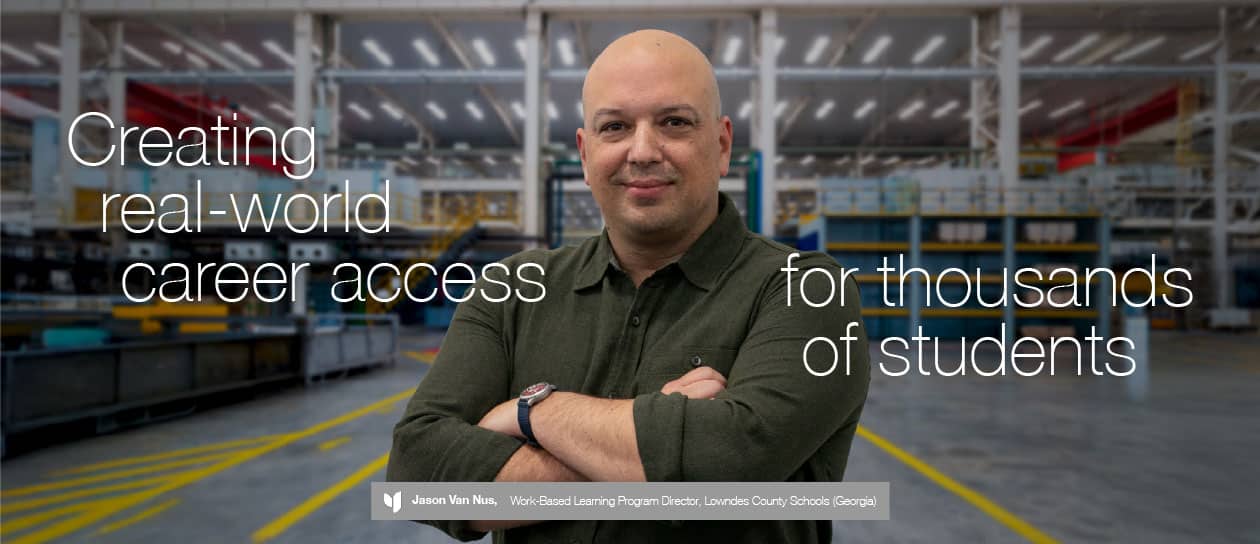
Jason Van Nus does not speak about students as if they are waiting for adulthood to begin contributing. He speaks about them as if they are already part of the workforce conversation.
As Director of Work-Based Learning (WBL) and Youth Apprenticeship Programs for Lowndes County Schools in Georgia, Van Nus has built a system that challenges traditional assumptions about career readiness. His work has drawn national attention and earned him recognition as Georgia’s ACTE Teacher of the Year, with his name entering the conversation for national honors as well. Yet the more compelling story is not about awards. It is about alignment between aptitude, opportunity, and economic demand.
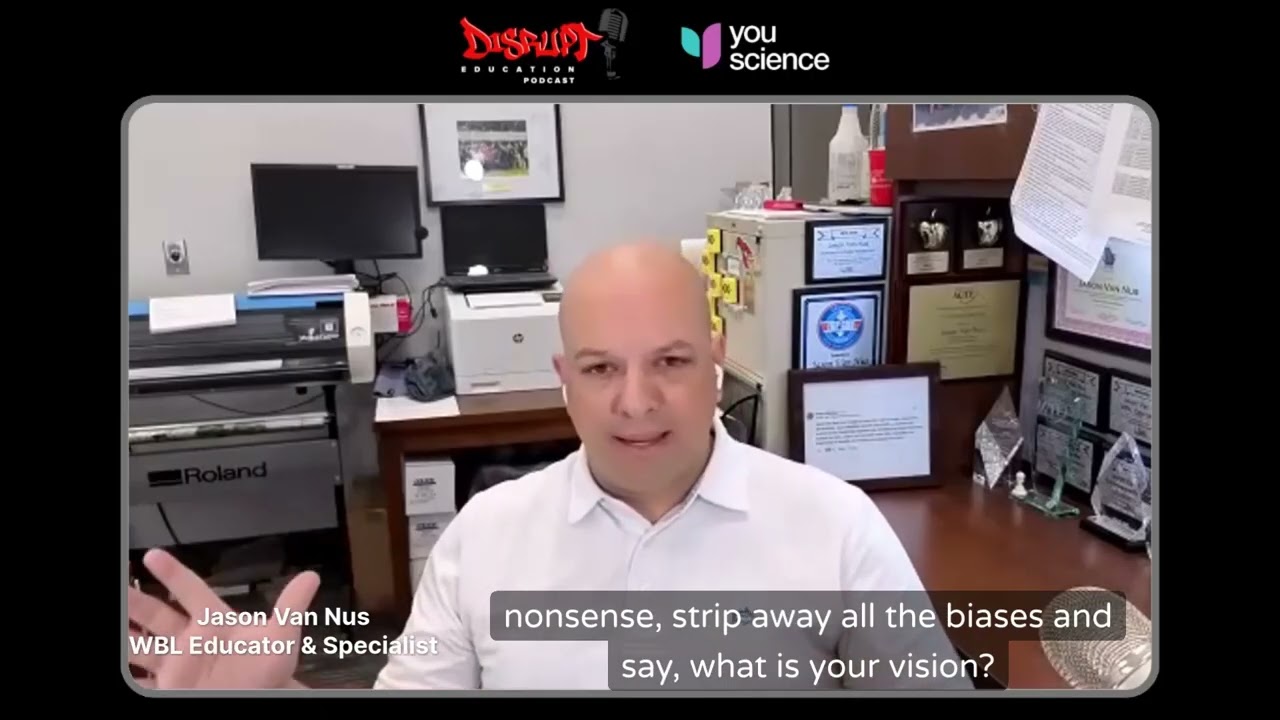
“As a gentle disruptor, my mission is to challenge traditional education norms and demonstrate the power of connecting students with real-world opportunities,” Van Nus explains. “By leveraging YouScience, we’re not just preparing students for jobs; we’re equipping them to be future leaders.”

A different way to think about talent
In many districts, career exploration begins with a simple question: What do you want to be? Van Nus begins somewhere else entirely. He asks what students are naturally wired to do well. To answer this question, he has all of his WBL students take YouScience Aptitude & Career Discovery.
“YouScience is the sharpest arrow in my quiver, allowing me to place students in environments where they thrive and contribute meaningfully to the economy,” he says.
For Van Nus, aptitude data is not an add-on assessment or a one-time exercise. It is infrastructure. In his presentations to educators across the country, he emphasizes that aptitudes offer predictive strength beyond interest surveys alone, which can be shaped by geography, socioeconomic exposure, or limited awareness of available careers. Aptitudes expand possibility. They reveal strengths that students may not yet recognize in themselves.
In Lowndes County Schools, that insight is operationalized across the system. WBL Coordinators and CTAE teachers use aptitude profiles to anchor career conversations and strengthen relationships with students. These educators recruit aptitude-aligned students into programs based on demonstrated strengths rather than schedule availability. Within work-based learning and youth apprenticeship programs, aptitude data functions as a skill-set repository for pairing students with employers and preparing them for interviews.
What emerges is not a new program layered onto existing work, but a cultural shift. Teachers, students, their parents, and community members begin speaking a common language about student strengths and career pathways. Career-connected learning moves from aspiration to strategy.
Turning data into placement
The most visible impact of Van Nus’s approach appears in how students are placed into work-based learning opportunities. Many systems offer exposure like career fairs, guest speakers, occasional job shadows, but Lowndes County builds pipelines.
Van Nus uses aptitude insights to recruit students organically into work-based placements, match them with employers aligned to their demonstrated strengths, and coach them to articulate those strengths with precision. He trains students to replace generic descriptors with evidence-based language grounded in their profiles. In interviews, they speak not in empty adjectives but in concrete terms about how they think, solve problems, and contribute to teams.
This philosophy led to one of his most innovative initiatives: a Reverse Career Fair. Rather than employers pitching positions to students, students present and pitch themselves to employers. They describe their aptitudes, career drivers, and aspirations. Employers respond not with vague encouragement but with tangible opportunities.
The response from industry has been decisive. Employers, facing labor shortages and skills gaps, recognize clarity when they see it. Aptitude data provides a signal; it reduces guesswork and gives business leaders a way to identify young talent with measurable alignment to workplace needs.
Van Nus is deliberate in speaking the language of return on investment. He frames high school talent not as a charitable outreach opportunity but as an economic asset. His model follows a clear progression: access to talent leads to retention, which ultimately builds a sustainable pipeline.
When students create opportunity
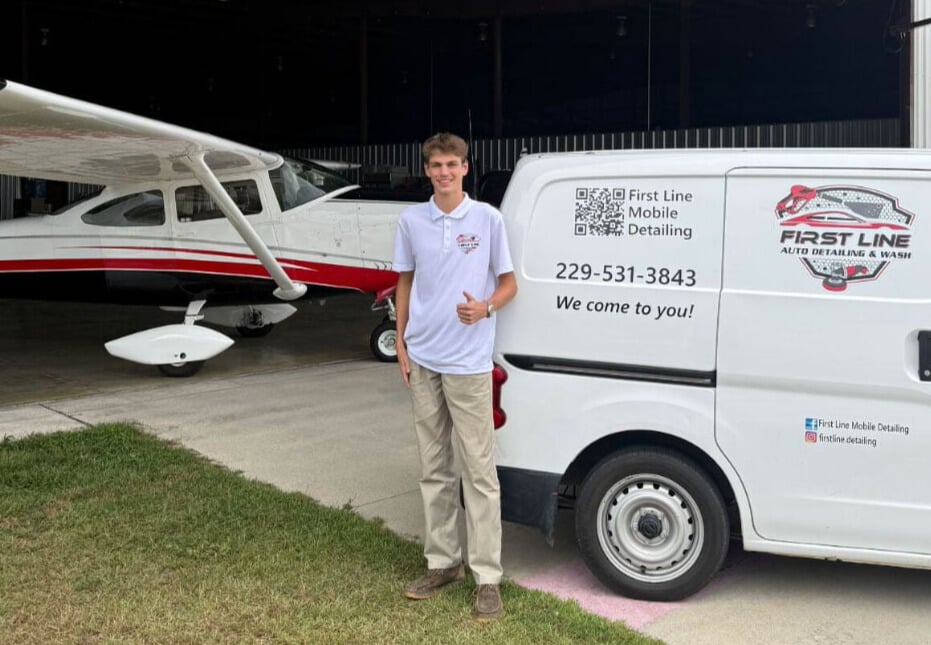
The power of this approach is perhaps best illustrated in the story of Landon Breeden, a Lowndes County student who initially aspired to become a pilot. Because pilot licensure is not a feasible high school work-based learning placement, Landon could have viewed that dream as deferred. Instead, he leaned into his YouScience results and discovered strong entrepreneurial aptitudes.
He launched a mobile detailing business.
What followed was unprecedented. Landon became one of the first known students in Georgia to serve simultaneously as a work-based learning student and a work-based learning employer. He hired a fellow Lowndes High School WBL student, creating opportunity not only for himself but for others.
“You don’t often see high school students thinking like this,” Van Nus observes. “Most are looking for a placement. Landon created one, and now provides placements for others.”
Landon continues working toward his pilot’s license, funding that ambition through his growing business. His story reflects a broader truth: career-connected learning is not merely about finding pathways that exist. It is about building new ones.
Overcoming resistance and reshaping culture
Transformation at this scale does not occur without resistance. Van Nus acknowledges that early misconceptions presented barriers. Some educators perceived YouScience as an additional task or as a tool reserved solely for CTAE programs. Others clung to the false dichotomy between “college-bound” and “career-bound” students.
He addressed these concerns not with slogans but with demonstrations. He showed how aptitude data could inform differentiated instruction, strengthen SEL conversations, support IEP transition plans, guide scheduling priorities, and even reduce discipline referrals through better alignment between students and their learning environments.
Over time, aptitude-informed interactions became embedded in daily practice. What began as an initiative evolved into identity.
Speaking the language of industry
Van Nus believes that education must meet industry where it stands. Employers speak in terms of productivity, retention, scalability, and return. He speaks that language fluently.
“We have to talk about return on investment,” he says. “Students are returnable assets in their communities.”
By aligning course offerings to labor demand, building employer profiles, and using data to inform placement decisions, Van Nus and other CTAE/WBL teachers position their programs not merely as an educational checkbox but as a community and workforce development system. Industry leaders increasingly view the program as a source of vetted, well-prepared young talent.
The implications extend beyond one region. In an era marked by talent shortages and shifting economic demands, Van Nus’s model demonstrates that the solution may already exist within high school walls—if educators know how to identify it.
Every student connected and ready
Jason Van Nus does not describe his work in grandiose terms. He prefers the phrase “gentle disruptor.” Yet the disruption is real. He has replaced guesswork with evidence, exposure with alignment, and vague ambition with actionable strategy.
His work suggests that high school talent is not scarce. It is often under-identified and under-leveraged.
When educators use aptitude data intentionally, they can align pathways to workforce demand, equip students to advocate for themselves, and build employer partnerships grounded in measurable strengths. They can ensure that students graduate not only with diplomas, but with direction.
In Lowndes County, that vision is no longer theoretical. It is operational.
And for districts seeking to ensure that every student leaves school connected and ready, the model offers a compelling place to begin.
Ready to build a workforce pipeline inside your high school?
Discover how YouScience can help you transform aptitude data into real-world placement, partnerships, and measurable impact.