
How Chris Brida is creating intentional CTE programs in Portland Public Schools


In many school systems, career pathways grow organically. Programs are added when funding appears. Partnerships emerge when an employer shows interest. New courses are introduced in response to labor market reports or student demand. Over time, districts accumulate opportunities, but rarely design them intentionally as interconnected systems.
Christopher Brida is working to change that.
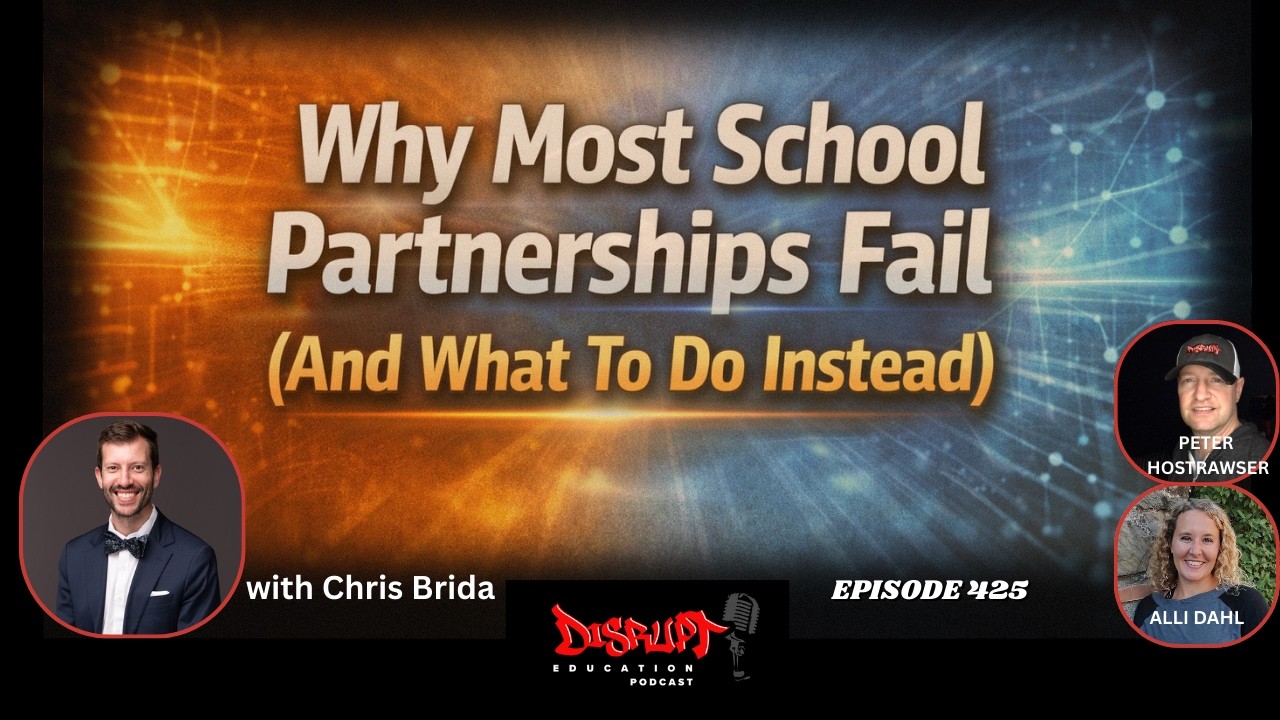
As Director of Career and Technical Education for Portland Public Schools, Brida is leading a districtwide effort to move beyond isolated programs toward what he describes as “career-connected ecosystems.”
His work spans 80 career pathways and involves coordinating partnerships across industry, postsecondary institutions, and community organizations. The goal is not simply to increase participation in career education. It is to build a responsive talent infrastructure that aligns student aptitudes with regional opportunities.
At the center of this shift is a strategic distinction that defines Brida’s approach: career-connected learning should not be organized around programs alone. It should be designed at the intersection of student aptitude, system capacity, and partnership alignment.
From pathway expansion to ecosystem design
For Brida, the question is not how many pathways a district can offer. It is how effectively those pathways connect students to meaningful futures.
In traditional models, districts often develop pathways in response to external pressures—economic forecasts, workforce shortages, or community advocacy. While these factors remain important, Brida argues they represent only one dimension of effective system design. Without visibility into student abilities, pathway planning risks becoming reactive rather than intentional.
When ninth graders complete aptitude assessments, the information generated is not limited to individual advising conversations. Aggregated across cohorts, it begins to reveal patterns about emerging talents within a community. These insights can influence decisions about which partnerships to deepen, which programs to scale, and where new opportunities should be introduced.
In Portland, this has led to a deliberate strategy of aligning partnership ecosystems around clusters of demonstrated student aptitudes. For example:
- Engineering-related aptitudes may prompt expanded collaboration with universities and advanced manufacturing employers.
- Social perceptiveness trends can inform investments in healthcare and human services pathways.
- Analytical and pattern-recognition talents can guide growth in technology or clean energy partnerships.
The result is a system that evolves in response to evidence rather than assumption.
Designing partnerships around capability
This shift from reactive program development to ecosystem architecture has significant implications for how partnerships are formed and sustained. In Brida’s model, industry partners are not simply invited to support existing initiatives. They are engaged as co-designers in building pathways that reflect both workforce demand and student capability.
- Postsecondary institutions participate earlier in pathway planning, helping to create clearer bridges between high school learning and credential attainment.
- Community organizations contribute to experiential learning opportunities that reinforce civic engagement alongside career preparation.
- Educators collaborate across departments to ensure that academic instruction, advising, and technical training align with a shared vision of student readiness.
Brida describes this as intentional partnership design, a process that requires ongoing coordination but yields more coherent outcomes. When partners see evidence of emerging talent, they are more likely to invest time and resources. When pathways reflect real opportunities, students navigate them with greater clarity and confidence.
Over time, the district begins to function less like a collection of independent programs and more like an integrated ecosystem.
Equity through visibility
One of the most consequential aspects of Brida’s work lies in its potential to reshape equity conversations. Traditional academic metrics often fail to capture talents such as spatial reasoning, mechanical problem-solving, systems thinking, or social perceptiveness—abilities that are highly valued in many high-demand industries.
By making these aptitudes visible, districts can challenge assumptions about who belongs in certain pathways. Students who might otherwise be overlooked gain access to opportunities aligned with their natural capabilities. Advisors can advocate more effectively for placements that reflect abilities rather than stereotypes. Partnership strategies can expand to ensure that historically underserved students are represented in emerging sectors.
This approach reframes equity not as a matter of redistributing limited opportunities, but as a process of redesigning systems around the full spectrum of student talent.
From individual insight to collective strategy
Brida emphasizes that the most important shift occurs when aptitude data informs both student advising and system-level decision-making. Counselors gain a stronger foundation for guiding pathway choices. Success teams can align planning earlier in a student’s academic journey. Industry partners gain confidence that local schools are cultivating relevant talent. Postsecondary institutions can collaborate more strategically on dual enrollment or credential programs.
These dynamics create a reinforcing cycle. As partnership ecosystems expand, students encounter more meaningful opportunities. As engagement increases, pathways demonstrate stronger outcomes. As outcomes improve, partners deepen their investment. Over time, the district’s role evolves from program provider to civic and workforce innovation hub.
For Brida, this transformation reflects a broader belief about the purpose of public education. Schools, he argues, are uniquely positioned to connect individual aspiration with community need.
Designing for the future
Brida’s work is still unfolding, shaped by ongoing research into partnership design and boundary-spanning leadership. As a doctoral candidate examining how large urban districts sustain ecosystem-level models, he continues to refine approaches to aligning student aptitudes with evolving workforce demands.
Looking ahead, he envisions even more sophisticated uses of aptitude data from YouScience. Project-based learning teams could be composed intentionally based on complementary talents. Ecosystem gaps could be identified earlier, prompting targeted partnership development. Collaborative initiatives with external partners could be designed with greater precision, ensuring that opportunities match both student capability and community priorities.
The goal, he says, is not simply to increase pathway enrollment. It is to create environments where students feel known for what they are naturally wired to do—and where the surrounding system responds accordingly.
Every student, career-connected and ready for life
Christopher Brida’s work highlights an important distinction for districts nationwide: expanding career programs is not the same as designing career ecosystems. Real innovation emerges when student abilities, institutional capacity, and cross-sector partnership strategy are intentionally aligned at scale.
In 2024, Portland Public Schools selected YouScience as its college and career readiness platform partner, marking a significant step in strengthening the district’s Career and Technical Education pathway strategy. Serving more than 44,000 students across 81 schools, Portland Public Schools is one of the largest districts in the Pacific Northwest. The adoption of YouScience reflects a broader shift toward data-informed decision-making that supports both improved student outcomes and regional workforce development in Oregon’s largest urban center.
Today, that alignment is beginning to take shape across more than 80 career pathways. The work requires sustained coordination, data literacy, and a willingness to challenge long-standing assumptions about how opportunity is structured within school systems. The potential benefits, however, are substantial: stronger student engagement, expanded access to high-demand fields, and a more resilient local talent pipeline.
For educators working to ensure that every student graduates connected and ready, Brida’s approach offers a compelling blueprint, one that moves beyond exposure toward intentional ecosystem design.

Ready to design career-connected ecosystems in your district?
Discover how YouScience can help you align student aptitudes with partnership strategy, pathway planning, and real workforce opportunity.
- Request a demo